How to measure your pet for an airline carrier
Two measurements decide everything: length from nose to the base of the tail, and height from the floor to the top of the head (ears up) while standing. Airlines then apply one rule — your pet must be able to stand up and turn around inside the carrier — and the carrier itself must fit under the seat.
The two measurements, done right
Measure while your pet stands naturally. Length runs nose to tail base (the tail itself doesn't count — it folds). Height runs floor to the top of the head or ear tips, whichever is higher. Add a couple of inches of comfort to each and you have the smallest carrier that's fair to your pet.
The stand-and-turn rule
Every major airline phrases its in-cabin requirement roughly the same way: the pet must be able to stand and turn around comfortably in the carrier. Gate agents check the pet, not a tape measure — a visibly cramped animal is what gets refused. That rule sets your carrier's minimum; the under-seat limit sets its maximum.
Where the squeeze happens
Height is the tight dimension: seats sit roughly 8–11 inches off the floor depending on airline and aircraft, which is why soft-sided carriers with a little flex dominate our fit rankings, and why the published number is optimistic. Taller cats and long-backed breeds hit this ceiling first.
Putting it together
Once you have length and height: pick your airline on the fit matcher to see which carriers clear its published limit, or start from a carrier you like — each carrier page shows exactly which airlines it fits. The right buy is the largest carrier that fits your airline and still gives your pet the stand-and-turn room.
Next: the fit matcher · best carriers ranked by fit · the under-seat truth
Carriers that clear the most airlines
Ranked by how many of the 43 airlines with a published cabin limit each one clears at its published size — the same computation behind every fit verdict on this site.
Affiliate link — we may earn a small commission at no extra cost to you. It never changes our specs or which carriers we list.
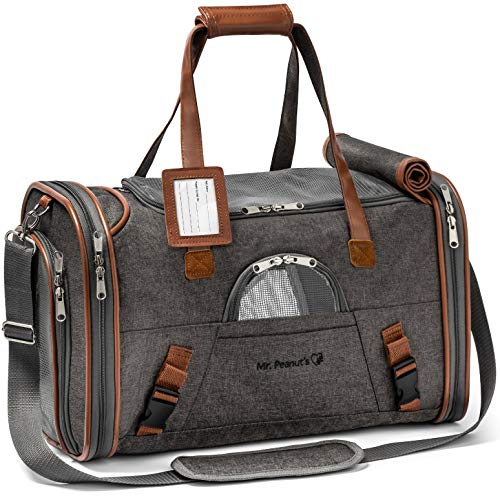 Mr. Peanut's Gold Series Mini (Low-Profile)
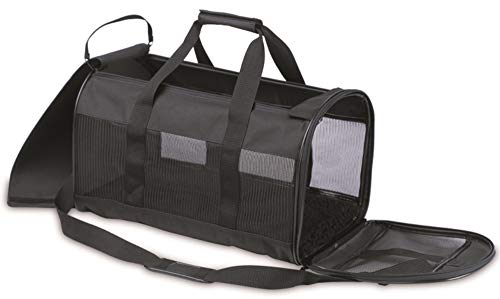 Petmate Soft-Sided Kennel Cab (Medium)
 Mr. Peanut's Gold Series Standard (Expandable)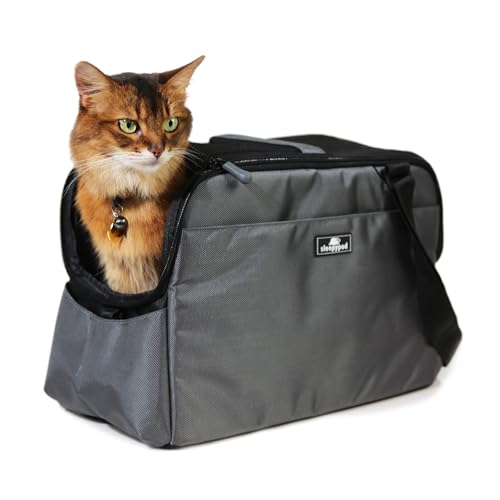

Common questions
Should the carrier be bigger or smaller than my pet?
A little bigger — a few inches longer than your pet's nose-to-tail-base length, and tall enough to sit and lie naturally. Then it must still fit under YOUR airline's seat: that's the squeeze this whole site exists to resolve.
My pet is right between carrier sizes — which way do I go?
For flying, down. Airlines enforce the carrier's fit under the seat, and a slightly snug soft-sided carrier that your pet can still stand and turn in beats a roomy one that gets refused at the gate.
Does my pet's weight matter, or just size?
Often, yes — 26 of 45 cabin-allowing airlines we track (58%) publish a COMBINED pet-plus-carrier weight cap, not just a size limit. Check your airline's hub page here; each lists the official figure with its source.